1.Introduction
Health care simulation labs, whether conducted in person or through virtual technologies, are fundamental in educating students and staff. They provide experiential, immersive learning experiences that closely replicate clinical scenarios and engage healthcare providers to foster clinical competence.[1] This approach equips learners with essential skills, knowledge, and behavioural considerations in a secure, controlled environment, thereby enhancing learning outcomes for healthcare students and staff.[2, 3] As a result, simulations can help improve preparedness, self-confidence, and self-esteem for real-life healthcare situations.[1,2,3]
The history of simulation education dates back to between 24,000 and 22,000 BC, with stone carvings of human figures discovered across Eurasia from this period. The earliest written reference to simulation in healthcare education is found in the Sushruta Samhita, which describes wooden objects used as surgical training simulators. In the early 20th century, significant developments included Martha Jenkins Chase’s creation of a doll in 1911 for training nurses in wound care and medication administration. During the 1940s, the US Army employed manikins to teach medical techniques to corpsmen. The 1960s marked a pivotal era in medical simulation. The Resusci Anne was developed as an affordable training model for resuscitation, while SimOne emerged as an advanced manikin capable of simulating various physiological responses. Additionally, during this era, the Harvey simulator was developed as a hybrid training tool for cardiology, combining traditional manikin features with computer-enhanced capabilities. Anesthesia was among the first fields to adopt medical simulation in this era, introducing a simulator that mimicked physiological responses to drugs and taught basic airway management.[4] Today, healthcare simulation encompasses various modalities for teaching. Scenarios with standardized patients help develop interpersonal and communication skills, while task trainers, cadavers, and animal models allow for practice of procedures without risking patient safety. Interactive software, virtual reality, and high-fidelity manikins are used to simulate medical emergencies, contributing to improved patient survival rates.[5,6,7] The increasing complexity of medical procedures and the need for continuous skill development have led to a growing demand for effective simulation training in healthcare. In response to this growing demand, innovative portable technologies have been introduced, allowing on-site training and skill reinforcement.[6,7,8,9,10]
In recent years, there has been a growing interest in the integration of simulation technologies into healthcare delivery settings. Advanced simulation tools can support healthcare practitioners in integrating learning into their daily routines, enhancing their ability to provide high-quality care by improving preparedness for diverse patient scenarios and reducing the gap between theoretical knowledge, evidence, and practical application.[11] While simulation-based learning has been extensively studied within education settings for student learners and demonstrated the ability to enhance knowledge, skill acquisition,[12] and competency,[13] the accessibility of static simulation laboratory locations can pose challenges to access these learning environments for healthcare professionals. The advent of portable simulation-based learning opportunities may help promote accessibility to Simulation-based learning (SBL) in healthcare environments; however, a comprehensive review of the evidence to help inform the integration of portable simulation initiatives has yet to be done. This scoping review aimed to identify the current evidence on portable simulation-based education delivery for nursing and medical staff in clinical settings.
2.Methods
This scoping review was conducted in accordance with the 5-stage methodological framework, described by Arksey and O’Malley (2005) and adhered to the Preferred Reporting Items for Systematic Reviews and Meta-Analysis Extension for Scoping Reviews (PRISMA-ScR) Checklist.[14] A comprehensive literature search was completed in MEDLINE, CINAHL, and ERIC databases from January 1, 2010, up to August 2025. The reference lists of included studies were also reviewed. The terms of the search included clinical simulation, portable simulation technologies, mobile simulation units, simulation wheels, virtual reality, augmented reality, education, nursing, medical, and hospital. Full details of each search strategy are available in Appendix 1. Studies were included if they met the following criteria: virtual or portable simulation technology used in a hospital setting for health care providers. Studies that took place in specialized settings that may not be generalizable to a larger hospital-based education curriculum were excluded; for example, surgical, cardiac catheterization, nursing home, or long-term care settings. Studies were excluded during full-text review if they did not meet the predefined inclusion criteria for this scoping review, including studies conducted in non-hospital settings, studies not involving portable or simulation-based educational interventions, studies not reporting educational outcomes relevant to healthcare providers, or studies with designs outside the review scope. Studies published before 2010 were excluded due to significant technological advancements. Studies involving only students were excluded. Studies which included nursing, medical, and allied health staff were included, although nursing and/or physicians must have been included as study participants and where results focused on sub-group analysis of results related to the nursing and medical professions. The following research questions were established to explore the evidence for portable simulation technology used in the hospital setting:
1) What portable simulation modalities are being used to support education delivery to nursing and medical staff?
2) What are the educational outcomes associated with the studied portable simulation technology?
2.1Selection of studies
References were imported into Covidence (Veritas Health Innovation) to facilitate article screening. Duplicates were removed. Two reviewers independently conducted level 1 (title and abstract) screening and level 2 (full text article) screening. Any conflicts that arose between reviewers were resolved by a third reviewer.
2.2Data extraction and analysis
Data were extracted by the same two reviewers. Consensus was completed by the third reviewer and the senior author. The Covidence Data Extraction template for scoping reviews was used as a template with additional fields added. Based on the full text review, the following categories were added for data extraction: portable simulation type, total number of participants, outcome(s) of interest, barriers, facilitators, and future considerations. The analysis focused on identifying the simulation type and outcomes measured. Qualitative thematic analysis was used to identify patterns and themes across the 65 studies that were included in this scoping review.
3.Results
The literature search identified a total of 5654 articles from three databases, of which 1344 articles were excluded as duplicates. There were 4330 articles left for further review. After title and abstract review, an additional 4209 studies were excluded. A full-text review was conducted on the remaining 121 articles, with 65 articles meeting the inclusion criteria (see Figure 1).
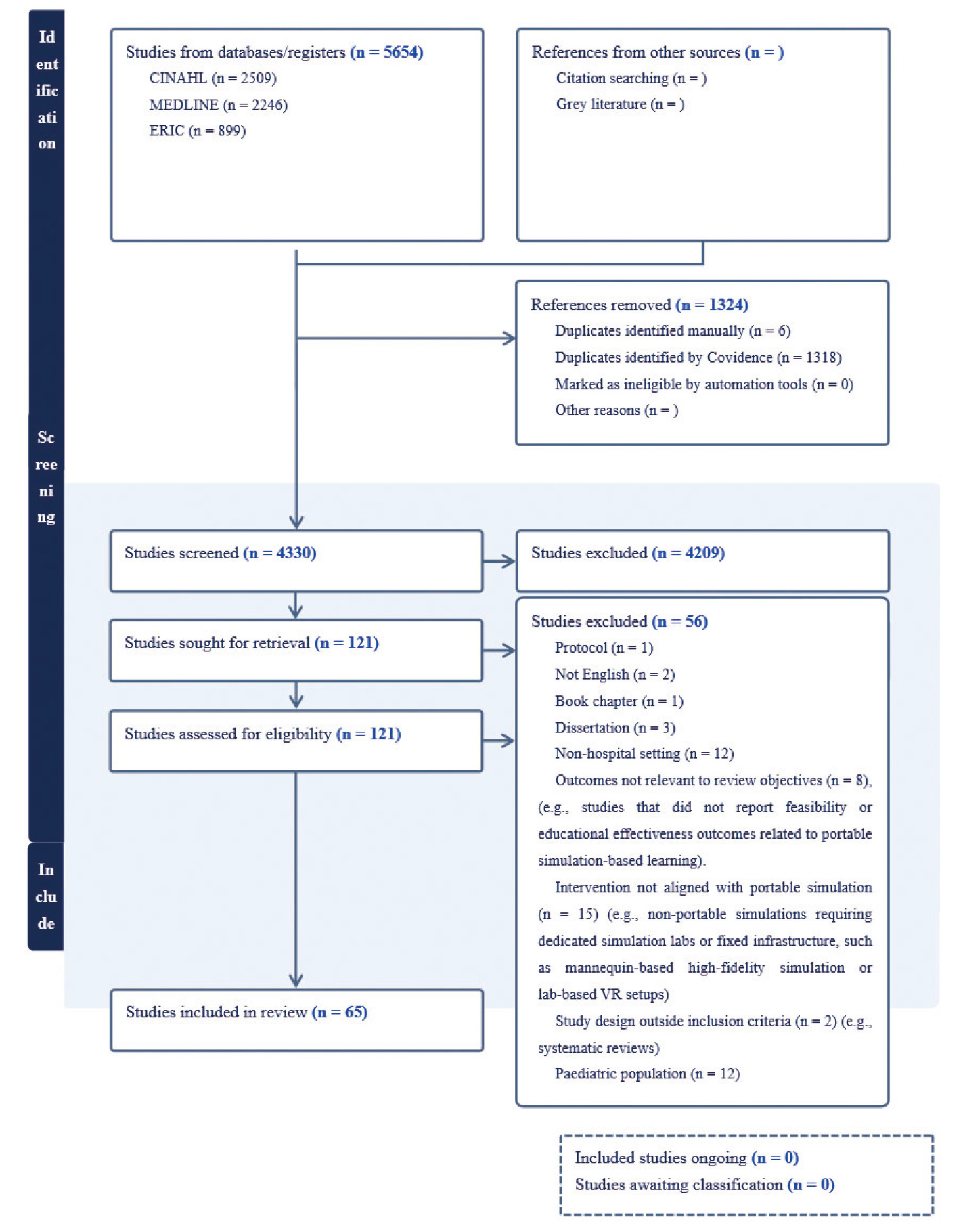
Figure 1.
PRISMA Diagram
3.1Article and study characteristics
3.1.1Study characteristics
Most studies were conducted in the United States (n = 18) and South Korea (n = 11). Seven studies were undertaken in Taiwan, seven in China, and four in Canada. The remaining studies were distributed across Europe, including Germany (n = 2), the United Kingdom (n = 2), Sweden (n = 2), Italy (n = 1), France (n = 1), South Africa (n = 1), Saudi Arabia (n = 1), Iran (n = 1), Singapore (n = 1), Singapore and Malaysia (n = 1), Israel (n = 1), Colombia (n = 1), Australia (n = 1), and Japan (n = 2), demonstrating broad international interest in portable simulation-based education.
Study designs were heterogeneous and included randomized controlled trials (n = 16), quasi-experimental (n = 13), mixed-methods (n = 9), and pre-post-test studies (n = 8). The remaining studies included qualitative (n = 5), quantitative (n = 4), descriptive (n = 2), framework-based design (n = 4), cohort study (n = 1), post-test observation (n = 1), time-series, prospective pilot study (n = 1), and non-randomized controlled design (n = 1).
Across the 65 included studies, the majority focused on nurses, who were the primary population in 37 studies. Physicians were the sole participants in 4 studies. The remaining 24 studies involved mixed healthcare professional groups, including combinations of nurses, physicians, nursing assistants, nurse practitioners, pharmacists, medical trainees, allied health professionals, and students. Overall, participants represented a broad spectrum of healthcare roles, with nurses being the most frequently studied group (see Appendix 2).
3.1.2Simulation modalities and portability
Among the 65 included studies, VR-only simulations were the most frequent education medium (n = 21), followed by hybrid simulations (n = 11). Traditional low- and high-fidelity simulations (n = 4) were described, utilizing manikins and task trainers to support hands-on practice. Other mediums included computer-based simulations (n = 6), web-based simulations (n = 5), game-based or mobile simulations (n = 5), AR-only simulations (n = 4), virtual patient simulations (non-VR, non-game) (n = 3), mobile or travelling simulation carts (n = 2), and other educational interventions and learning mediums (n = 4).
Most VR (n = 19),[15,16,17,18,19,20,21,22,23,24,25,26,27,28,29,30,31,32,33] computer-based/web-based (n = 11),[34,35,36,37,38,39,40,41,42,43,44] game-based and mobile (n = 5),[45,46,47,48,49] and virtual patient simulations (n = 3)[50,51,52] were fully portable and usable across multiple learning environments. Some VR simulations were semi- or potentially portable due to manikin integration or PC-tethering (n = 2).[53, 54] Of 11 hybrid simulations,[55,56,57,58,59,60,61,62,63,64,65] seven were fully portable,[55,56,57,58,59,60,61] one was semi-portable due to blended online and hands-on training,[62] and three were portable but required significant set-up due to physical and mechanical components.[63,64,65] All AR simulations (n = 4) were portable, using standalone headsets or mobile devices.[66,67,68,69]
High-fidelity simulations varied: two were portable[70, 71] and deployable on laptops with task trainers, while two were portable but required significant set-up considerations due to reliance on manikins and specific hospital environment requirements.[72, 73] Some structured interventions required significant set-up (n = 3).[74,75,76] These included high-fidelity manikins and unit-based simulation setups, though one study promoted portability, combining high-fidelity, virtual, and case-based simulations.[77] Mobile carts and in situ models (n = 2) were fully transportable, enabling context-specific clinical training.[78, 79]
VR offers an immersive, computer-generated environment that supports experiential learning and reflective practice 12. Across the studies, VR simulations were frequently described as engaging, realistic, and acceptable to healthcare learners, with reported benefits across cognitive and affective learning domains. For instance, Kai et al.[23] reported that VR simulation enhanced understanding of clinical procedures, while Gillespie et al.[19] found that VR facilitated better understanding of the social determinants of health and patient complexity. Similarly, Beverly et al.[15] reported increased awareness of disability-related discrimination and improved confidence in recognizing and reporting abuse. Forgiarini et al.[18] found VR simulation engaging, challenging, and useful for improving self-confidence, though participants required time to adapt to the technology. In a quasi-experimental study, Kim et al.[24] observed significant improvements in knowledge, self-efficacy, and learning satisfaction in the VR group compared with conventional learning. Comparable results were reported by Rowlands et al.,[27] Jeon et al.,[21] and Gunther et al.,[20] who identified enhanced motivation, empathy, and performance following VR-based interventions. Other studies noted improvements in diagnostic performance, dementia–care practices, clinical reasoning, and learner confidence.[17, 30, 31, 54] Learner satisfaction was consistently high,[25, 53] although some studies highlighted limitations such as headset discomfort, technological adaptation,[28] and preferences for blended approaches combining VR with in-person training.[33] Jung et al.[22] observed improved knowledge, self-efficacy, and perceptions of accessibility. Similarly, Chiang et al.[16] demonstrated that VR training materials substantially improve trainees’ self-efficacy by boosting their familiarity, confidence, and comfort, while increasing satisfaction with the learning experience and motivating them to apply the skills and knowledge in clinical practice. Notably, Zhang et al.[32] found no significant differences in theoretical or performance scores compared with traditional methods; participants still regarded VR as a realistic and safe environment for practice.
Overall, VR simulation has demonstrated strong potential as a flexible educational modality that supports experiential learning, confidence development, and skills application, while acknowledging ongoing technological and implementation challenges.
Hybrid simulations combine two or more simulation modalities, such as manikins, standardized patients, and digital or virtual tools, to create a more comprehensive and realistic learning experience. This blended approach improved both technical and communication skills, bridging the gap between traditional and technology-enhanced learning.[1] Across studies, hybrid approaches were associated with improvements in technical skills, communication, and clinical performance. For example, Guerrero et al.[64] reported gains in knowledge and clinical examination performance following combined VR and high-fidelity training, while Hung et al.[57] observed improvements in attitudes, knowledge-related outcomes, and self-efficacy using integrated VR and AR simulations for oral care education.
Several studies highlighted the adaptability and practicality of hybrid models. Dwyer et al.[56] described a portable hybrid simulation combining high-fidelity elements with humanistic role-play, which enhanced recognition of patient deterioration in settings without access to simulation centers. Similarly, Huang et al.[62] and Zhang et al.[61] reported increased confidence, familiarity with decision-making, and disaster preparedness through blended VR and hands-on training approaches. Reece et al.[60] demonstrated improvements in teamwork and clinical performance, including a 36.6% reduction in PPE breaches, using VR simulations and standardized patients or manikins.
Other studies reported positive learner perceptions and performance-related outcomes using hybrid delivery, including mobile education programs,[59] smartphone-based MCI training,[55] and web-based applications with AR components for end-of-life care education.[58] In a comparative study, New et al.[65] found that manikin-based simulation was more realistic and emotionally engaging than VR for hemoptysis management, while Covington et al.[63] demonstrated improvements in emergency airway management knowledge and self-efficacy following combined online and in-situ simulation.
Overall, hybrid simulations demonstrated versatility across healthcare contexts and were associated with technical, interpersonal, and teamwork-related learning. By combining physical and digital components, hybrid approaches offer adaptable and resource-efficient strategies for clinical education.
Computer- and web-based simulations are increasingly used in nursing education to provide safe, interactive, and accessible learning environments, supporting knowledge acquisition, clinical skill development, and decision-making through flexible virtual scenarios.[36, 38] Evidence from the reviewed studies demonstrates positive educational outcomes across multiple domains. For example, Marsack et al.[36] reported sustained improvements in knowledge and confidence in early sepsis recognition immediately after training and at three-month follow-up, while Parchami et al.[37] observed higher moral sensitivity in intervention groups two months post-training. Simulation tools such as Urecath[35] and Visual Blood[39] were associated with improved confidence, diagnostic accuracy, and performance, alongside high usability and willingness to integrate these tools into practice.
Similarly, web-based interactive simulations demonstrated significant improvements in knowledge, accuracy, compliance, and self-efficacy, as reported by Hung et al.[40] in personal protective equipment training. Liaw et al.[42] found enhanced clinical performance and learner satisfaction in acute care education, and Moule et al.[44] observed increased knowledge in oncology training using virtual patient simulations. During the COVID-19 pandemic, Mastoras et al.[43] reported that fully online critical care triage simulations improved confidence, knowledge, comfort, and attitudes toward practice. Ko et al.[41] also demonstrated significant gains in disaster mental health competence, problem-solving, self-leadership, self-efficacy, and motivation following web- and mobile-based training.
Overall, computer- and web-based simulation modalities were consistently associated with positive learning and competency-related outcomes, with effectiveness varying according to learning objectives, technological features, and instructional design.
Game-based and mobile simulations use interactive digital platforms, including smartphone applications and serious games, to support engagement, self-paced learning, and clinical decision-making.[45, 46, 48] These mediums were associated with improvements in knowledge-related outcomes, confidence, and performance while offering flexible and accessible training options across all studies examining these mediums. Wang et al.[48] reported improved skill performance and reduced procedural errors following a game-based mobile intervention. Similarly, Albright et al. (2013) observed increases in knowledge, skill, behavioural intent, with participants describing the training as realistic and satisfactory. Wang et al.[49] found significant improvements in theoretical test scores and procedural performance using a game-based ECMO training application, while Chang et al.[46] reported enhanced attitudes, communication competence, and decision-making accuracy following smartphone-based virtual simulation. Lim et al.[47] also demonstrated improved preparedness for nursing delegation after completion of a mobile simulation program.
Overall, game-based and mobile simulations were associated with positive educational outcomes and represent engaging, scalable approaches for delivering clinical education across diverse healthcare settings.
AR enhances education by overlaying virtual elements onto the real world, allowing interaction with both physical and digital objects.[80] AR has been shown to improve the understanding of complex clinical procedures and skills. Leary et al.[68] found that learners using an AR CPR application demonstrated better engagement and reported more realistic patient presence compared with those using a standard audiovisual manikin. Similarly, Balian et al.[66] reported that AR-based CPR training was feasible and well-received, while Heo et al.[67] showed AR effectively guided ventilator setup using holographic prompts. Sun et al.[69] demonstrated improved nurses’ knowledge and performance in ACLS scenarios through AR applications.
Overall, AR provides flexible, safe, and effective platforms for learning complex procedures, particularly beneficial for remote or resource-limited settings, though challenges such as equipment requirements and cognitive load remain.
Virtual simulation is an interactive, computer-based learning approach that presents realistic patient scenarios through mobile devices or desktop browsers. These simulations provide engaging, self-directed learning opportunities that enhance knowledge, clinical reasoning, and technical skills. Studies have shown that virtual simulations effectively build learners’ confidence and competence while supporting the application of theory to practice.[50,51,52] The flexibility of these simulations allows healthcare providers to engage in training at their own pace and setting, making virtual simulation an efficient, scalable, and accessible tool for ongoing professional development.
Low- and high-fidelity simulation modalities have both been used to support clinical training with outcomes varying learning objectives and context.[70, 73] Arnold et al.[70] found no significant differences in knowledge, confidence, or performance when comparing low-fidelity, computer-based, and full-scale simulations for emergency response training. In contrast, Carpico et al.[72] reported improved adherence to ACLS algorithms following in-situ resuscitation review training among nursing staff, and Sok et al.[73] observed increased knowledge and performance and reduced stress using low-fidelity simulation in CPR training. Wang et al.[71] found that participants trained with high-fidelity simulation demonstrated higher performance scores, fewer medication errors, and better teamwork and communication compared with computer-based simulation. Together, both low- and high-fidelity simulations were associated with improved clinical preparedness, while high-fidelity models offered added value for complex decision-making and team-based skills.
Simulation-based educational interventions can improve clinicians’ competence, confidence, and performance by providing realistic, practice-based learning experiences.[75, 76] Structured interventions consistently demonstrated positive impacts on decision-making, diagnostic skills, and clinical performance. Fernández-Avila et al.[74] found that focused learning activities enhanced diagnostic reasoning. Luo et al.[77] reported that interactive, case-based exercises improved clinical judgement in complex scenarios. Page et al.[76] further showed that simulation-based central-line care training increased competency and reduced bloodstream infection rates. Han et al.[75] demonstrated improvements in ICU nurses’ self-efficacy and emergency airway management. Together, these studies indicate that well-designed simulation-based interventions effectively strengthen clinical reasoning, decision-making, and patient care outcomes across healthcare settings.[74, 77]
Portable simulation brings training directly to healthcare providers in their workplace, reducing interruptions to clinical responsibilities and eliminating the need for travel.[78, 79] Using self-contained mobile carts, learners engaged in realistic, hands-on practice across a variety of settings, building technical skills, critical thinking, and confidence while enabling immediate application of knowledge. Studies consistently reported that portable simulation was practical, valuable, and effective for integrating learning into daily practice, improving skills, competence, and self-confidence.[78, 79] This approach provides an adaptable, efficient, and safe model for high-quality clinical education in real-world environments.
The studies found that portable simulation technologies were the main educational method used. Examples include mobile simulation carts, virtual reality platforms, and web-based tools that help with clinical training in different settings. In general, portable simulation helped learners improve their clinical skills by allowing them to practice procedures and decision-making in a safe, low-risk environment.
A consistent theme across the reviewed studies was the improvement of learner confidence and engagement following simulation-based training. Participants often indicated improvements in self-efficacy, clinical task performance, and readiness to engage in patient care. These outcomes were most evident in immersive modalities such as virtual and augmented reality, which provided realistic scenarios that promoted active participation and experiential learning.
Improved clinical reasoning and decision-making were another major theme identified in the literature. Learners across different simulation types demonstrated stronger skills in assessing patients, selecting appropriate interventions, and applying clinical judgment in complex cases. Simulation-based activities enabled participants to practice responding to urgent, high-risk, or infrequently encountered scenarios in a controlled environment, thereby strengthening situational awareness and facilitating the transfer of knowledge to clinical practice.
Accessibility and portability were also identified as important advantages of portable simulation-based education. Unlike traditional simulation centres, portable technologies can be implemented directly within clinical environments, reducing barriers related to scheduling, travel, and access to specialized facilities. This flexibility enables healthcare providers to participate in training closer to the point of care and may support greater participation in continuing professional development activities. In summary, the findings show that portable simulation helps improve professional learning outcomes, such as clinical skills, confidence, and readiness for clinical practice.
Figure 2 summarizes the four major thematic areas identified across the reviewed literature and their contribution to professional learning outcomes in portable simulation-based healthcare education.
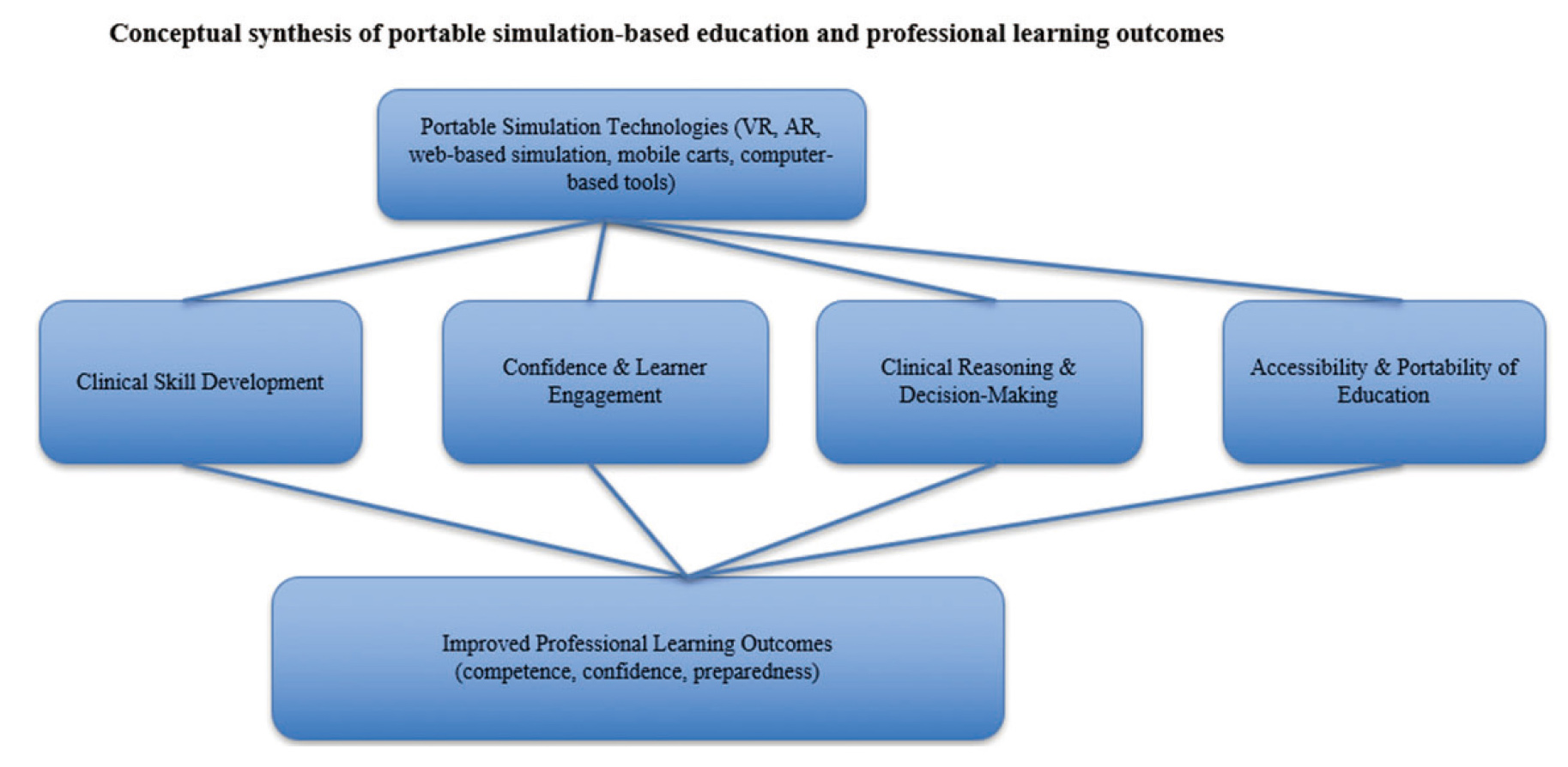
Figure 2.
Major Themes Identified in Portable Simulation-Based Education Literature
4.Discussion
The results of this scoping review suggest that portable simulation-based training effectively improves learners’ clinical skills, confidence, and ability to apply knowledge in practice. Participants reported improved performance in technical procedures, decision-making, critical thinking, and teamwork, which is consistent with recent studies showing that simulation-based learning enhances procedural competence, problem-solving abilities, and collaboration in healthcare education.[1, 80, 81] For practical applications in hospital settings, the discussion is organized into key educational outcome themes.
Four major thematic areas emerged from the literature synthesis: (1) clinical skill development, (2) confidence and learner engagement, (3) clinical reasoning and knowledge translation, and (4) accessibility and portability of education. These themes were consistently identified across multiple simulation modalities and healthcare disciplines.
4.1Clinical skills
The scoping review found improvement in clinical skills acquisition across portable, in situ, virtual reality (VR), augmented reality (AR), computer-based, and hybrid simulation modalities. Simulation strategies such as mobile units and hybrid task-trainer models supported structured assessment and immediate feedback, facilitating both psychomotor and cognitive skill development. This is consistent with evidence in academic settings. For instance, Altinbas et al.[82] demonstrated significantly greater clinical skill acquisition and retention among undergraduate nursing students trained in structured laboratory settings compared to those receiving theoretical instruction alone, although satisfaction and self-confidence were not significantly improved.
Point-of-care simulations offer additional advantages, particularly hands-on practice with physical equipment and contextualized, in situ learning. Cashen et al.[83] demonstrated that point-of-care CPR simulations with portable manikins improved both simulated and actual performance during pediatric in-hospital cardiac arrests, highlighting the value of in-situ, hands-on practice. Similarly, Naito et al.[84] found that bladder point-of-care ultrasound simulation exercises for nursing students led to sustained improvements in technical performance, image interpretation, and clinical decision-making.
Edler et al.[5] showed that small-scale, affordable simulators effectively improved procedural competency outside traditional laboratory settings, while Gower et al.[9] reported enhanced skill acquisition and teamwork in low-resource environments using portable in-person simulation.
4.2Confidence and learner engagement
VR simulations have been particularly noted for immersive learning experiences that enhance engagement and confidence. Macnamara et al.[7] reported that VR effectively replicated complex clinical scenarios within structured assessment environments. Similarly, Jenson et al.[6] demonstrated the potential of VR simulation in early application of VR technology in nursing education, which engages students through three-dimensional technology, emphasizing the benefits of immersive learning, procedural understanding, and decision-making. Augmented reality simulations offer interactive training by implementing digital elements into real-world environments to support procedural learning and clinical decision-making. Hess et al.[85] demonstrated that remote AR simulations effectively improve communication and clinical reasoning, and, moreover, were engaging. However, while AR enhances cognitive engagement, it may not fully replicate the tactile and contextual components of hands-on portable simulation.
4.3Knowledge application and clinical reasoning
Virtual reality simulations contributed to clinical reasoning by replicating complex clinical scenarios within immersive environments, enabling learners to practice procedural understanding and decision-making in realistic contexts.[6, 7] Similarly, augmented reality simulations supported clinical reasoning and communication through interactive, digitally enhanced learning experiences.[83] However, portable in-person simulation provided additional contextual and hands-on elements that reinforced knowledge translation into real-world settings.
4.4Portability, accessibility, and context-specific application
While stationary simulation laboratories provide structured environments for deliberate practice, they are limited by fixed location, specialized equipment, and dedicated personnel.[8, 13] Portable simulation approaches, including mobile skills carts, hybrid systems, computer-based programs, VR, and AR, extend training into clinical and educational settings, increasing accessibility and contextual learning opportunities.
Comparative findings suggest that portable, flexible simulation approaches can complement and surpass traditional laboratory training in accessibility, practicality, and real-world applicability. The ability to deliver training directly at the point of care enhances transferability of learning and supports hospital-based implementation strategies.
In the past 17 years, there has been an increasing adoption of portable simulation technologies in healthcare education, particularly for training nursing and medical staff in complex medical settings. The studies consistently demonstrated that these technologies could enhance clinical skills, improve participant engagement, and facilitate realistic, hands-on learning experiences.
4.5Synthesis of major findings
The comprehensive analysis of sixty-five studies emphasized geographical diversity of research with contributions from various countries. This variety highlights the global importance and feasibility of simulation-based education across various systems, cultural, and healthcare perspectives. The methodologies used varied from experimental to multicentre randomized trials, providing a strong framework for understanding the effects of simulation training in healthcare settings. Notably, all sixty-five studies incorporated simulation approaches with some degree of portability, with fifty-four employing fully portable modalities that enabled deployment across diverse clinical and educational settings. The remaining studies required minimal to substantial setup due to equipment or infrastructure demands but retained the capacity for on-site implementation. This high level of portability supports flexible integration of simulation-based training across healthcare contexts and expands access to educational resources, particularly in low-resource or decentralized settings.
The review highlights the effectiveness of a wide range of portable simulation modalities, including mobile simulation units/carts, VR, AR, computer-based platforms, mobile applications, game-based learning tools, hybrid simulation models, and both low- and high-fidelity portable simulators, in improving technical skills, clinical reasoning, and overall preparedness among healthcare staff in complex environments. Mobile simulation units and portable manikin-based systems were frequently identified as valuable for delivering realistic, hands-on training that supports skill acquisition and reinforces procedural competency in clinical settings. VR and AR technologies offer flexible, immersive, and scalable learning environments that can be tailored to diverse scenarios, fostering critical thinking, emotional regulation, and decision-making under pressure. Computer-based simulations, mobile apps, and game-based interventions provide accessible, repeatable learning opportunities that support knowledge consolidation and safe practice of cognitive and communication skills. Hybrid approaches integrating physical and digital elements further improved realism while maintaining portability.
While simulation-based education has proven highly effective, traditional fixed simulation centres continue to face significant structural and logistical barriers. Centralized facilities require considerable investment in space, equipment, and faculty, which can restrict both capacity and accessibility, especially where resources are limited or priorities compete.[1] Clinicians and learners are often required to attend simulation sessions at set times during their clinical shifts, which can disrupt routine duties and require additional staff coverage, leading to workflow challenges for departments.[86] Evidence from various settings shows that scheduling conflicts, limited access to simulation spaces, and the need to balance simulation with other clinical or educational responsibilities can reduce participation, even when the value of simulation is widely acknowledged.[87] These challenges highlight the need for portable simulation models that bring training closer to the point of care, minimize disruption, and expand access for a broader range of participants.
4.6Strengths
A major strength of this review is the comprehensive synthesis of portable simulation modalities across diverse healthcare professions and international settings. The 65 included studies demonstrate the broad applicability of portable simulation and VR-based learning across multidisciplinary healthcare teams. The inclusion of multiple simulation modalities, including VR, AR, mobile simulation, game-based learning, computer-based programs, and hybrid approaches, provides a broad overview of emerging educational technologies in healthcare environments. Additionally, this review highlights the growing integration of portable simulation into hospital-based continuing education and clinical learning environments.
4.7Limitations
Several limitations should be considered when interpreting the findings of this review. Many included studies were observational, descriptive, or quasi-experimental in nature, limiting causal interpretation and generalizability. The predominance of non-randomized and small-sample studies, combined with variability in simulation modalities and portability, limits the ability to determine causal effects on clinical practice and patient outcomes.
Although fully portable simulations, including VR, AR, computer-based, and game-based modalities, were well represented, some hybrid and VR simulations required significant setup or equipment integration, which may limit practical implementation and scalability across healthcare settings. Additionally, most studies focused primarily on learner-level outcomes such as knowledge, skills, confidence, self-efficacy, and satisfaction rather than patient-, organizational-, or system-level outcomes. As a result, the impact of portable simulation on clinical effectiveness, patient safety, and quality of care remains unclear.
4.8Future research
Future research should evaluate the long-term effects of portable simulation on clinical practice and patient outcomes, assess cost-effectiveness, address implementation challenges, and explore the use of portable simulation technologies in low-resource settings. More robust study designs with larger participant groups, randomized methodologies, and power calculations are needed to better understand the effectiveness and sustainability of portable simulation-based education in hospital settings.
5.Conclusion
This scoping review demonstrates that portable simulation-based educational modalities—including VR and AR, mobile and portable simulation carts, game- and web-based platforms, computer-based and virtual patient programs, hybrid models, and low- and high-fidelity simulations— have been associated with improved learners’ knowledge, confidence, technical skills, clinical judgment, and clinical reasoning across diverse hospital settings.
Different simulation modalities offered unique educational strengths. VR and AR technologies supported critical thinking, situational awareness, and immersive learning experiences, while portable and mobile simulation approaches enhanced hands-on procedural skills and contextualized learning. Web-, game-, and computer-based simulations provided flexible and scalable opportunities for continuing professional education.
Overall, portable simulation technologies offer flexible and accessible approaches to continuing education while supporting the integration of theory into clinical practice. Further research is needed to evaluate long-term clinical, organizational, and patient-related outcomes.
Authors contributions
SMV, AL, and MK were responsible for the study design. AKP developed the literature search strategy. MK and JH conducted the literature screening. MK, KAB, and TM drafted the initial manuscript. JH completed the initial revision of the manuscript. AL and OM contributed to manuscript revision and editing. SMV was responsible for the final revision and editing of the manuscript. All authors contributed to the interpretation of the findings, critically reviewed the manuscript, and approved the final version for publication.
Funding
This research received no specific grant from any funding agency in the public, commercial, or not-for-profit sectors.
Conflicts of Interest Disclosure
The authors declare that they have no known competing financial interests or personal relationships that could have appeared to influence the work reported in this paper.
Informed consent
Not applicable.
Ethics approval
The Publication Ethics Committee of the Association for Health Sciences and Education. The journal’s policies adhere to the Core Practices established by the Committee on Publication Ethics (COPE).
Provenance and peer review
Not commissioned; externally double-blind peer reviewed.
Data availability statement
The data that support the findings of this study are available on request from the corresponding author. The data are not publicly available due to privacy or ethical restrictions.
Data sharing statement
No additional data are available.
Supplementary information
Acknowledgements
The authors would like to acknowledge Providence Care Centre for supporting personnel in completing this scoping review and fostering opportunities for continuous learning and professional development.
References
- Elendu C, Amaechi D, Okatta A. The impact of simulation-based training in medical education: A review. Medicine (Baltimore). 2024;103(27):e38813. doi:10.1097/MD.0000000000038813
- Koukourikos K, Tsaloglidou A, Kourkouta L. Simulation in Clinical Nursing Education. Acta Inform Med. 2021;29(1):15-20. doi:10.5455/aim.2021.29.15-20
- Willett J, Adelman-Mullally T, Ng H. Virtual Reality Simulation Integration in a Prelicensure Nursing Program: Lessons Learned. Nurse Educ. 2024;49(4):217-221. doi:10.1097/NNE.0000000000001586
- Bienstock J, Heuer A. A review on the evolution of simulation-based training to help build a safer future. Medicine (Baltimore). 2022;101(25):e29503. doi:10.1097/MD.0000000000029503
- Edler A, Chen M, Honkanen A. Affordable simulation for small-scale training and assessment. Simul Healthc. 2010;5(2):112-5. doi:10.1097/SIH.0b013e3181c76332
- Jenson C, Forsyth D. Virtual reality simulation: using three-dimensional technology to teach nursing students. Comput Inform Nurs. 2012;30(6):312-8. doi:10.1097/NXN.0b013e31824af6ae
- Macnamara A, Bird K, Rigby A. High-fidelity simulation and virtual reality: an evaluation of medical students’ experiences. BMJ Simul Technol Enhanc Learn. 2021;7(6):528-535. doi:10.1136/bmjstel-2020-000625
- Sørensen J, Østergaard D, LeBlanc V. Design of simulation-based medical education and advantages and disadvantages of in situ simulation versus off-site simulation. BMC Med Educ. 2017;17(1):20. doi:10.1186/s12909-016-0838-3
- Gower S, Mossenson A, Ndekezi J. Building Global Partnerships: A Qualitative Exploration of In-Person Training for HealthCare Simulation Educators Working in Low-Resource Settings. Simul Healthc. 2025;20(1):7-15. doi:10.1097/SIH.0000000000000768
- Macnamara A, Rigby A, Sathyapalan T. A comparison of high-fidelity and virtual reality simulation as assessment tools in undergraduate medical education. Adv Simul (Lond). 2025;10(1):43. doi:10.1186/s41077-025-00374-y
- Kobayashi L, Patterson M, Overly F. Educational and research implications of portable human patient simulation in acute care medicine. Acad Emerg Med. 2008;15(11):1166-74. doi:10.1111/j.1553-2712.2008.00179.x
- Bradley P. The history of simulation in medical education and possible future directions. Medical Education. 2006;40(3):254-262. doi:10.1111/j.1365-2929.2006.02394.x
- StatPearls [Internet]. Past Present and Future of Simulation in Internal Medicine. Treasure Island (FL); StatPearls Publishing. 2025. https://www.ncbi.nlm.nih.gov/books/NBK549883/
- Tricco A, Lillie E, Zarin W. PRISMA Extension for Scoping Reviews (PRISMA-ScR): Checklist and Explanation. Ann Intern Med. 2018;169(7):467-473. doi:10.7326/M18-0850
- Beverly E, Love C, Love M. Cinematic Virtual Reality for Educating Health Care Providers About Type 2 Diabetes, Disability, and Elder Abuse and Neglect: A Pilot Study. J Diabetes Sci Technol. 2023;17(5):1160-1171. doi:10.1177/19322968231171586
- Chiang D, Huang C, Cheng S. Immersive virtual reality (VR) training increases the self-efficacy of in-hospital healthcare providers and patient families regarding tracheostomy-related knowledge and care skills: A prospective pre-post study. Medicine (Baltimore). 2022;101(2):e28570. doi:10.1097/MD.0000000000028570
- Clara J, Downing C, Ndayizigamiye P. Immersive solutions: South African community service nurses’ perspectives on virtual reality potential in hypertension management. Front Digit Health. 2025;7:1430438. doi:10.3389/fdgth.2025.1430438
- Forgiarini A, Deroma L, Buttussi F. Introducing Virtual Reality in a STEMI Coronary Syndrome Course: Qualitative Evaluation with Nurses and Doctors. Cyberpsychol Behav Soc Netw. 2024;27(6):387-398. doi:10.1089/cyber.2023.0414
- Gillespie G, Farra S, Regan S. Impact of immersive virtual reality simulations for changing knowledge, attitudes, and behaviors. Nurse Educ Today. 2021;105:105025. doi:10.1016/j.nedt.2021.105025
- Günther T, Schimböck F, Grosch M. Virtual reality for delirium: immersive training courses promote empathy and expertise in delirium management among registered nurses. Intensive Crit Care Nurs. 2025;91:104167. doi:10.1016/j.iccn.2025.104167
- Jeon H, Jeong H. Development and application of an immersive 360° video-based VR simulation program for pressure injury management for new nurses: A mixed methods study. Nurse Educ Pract. 2025;87:104481. doi:10.1016/j.nepr.2025.104481
- Jung S, Moon K. Pressure Ulcer Management Virtual Reality Simulation (PU-VRSim) for Novice Nurses: Mixed Methods Study. JMIR Serious Games. 2024;12:e53165. doi:10.2196/53165
- Kai K, Shinoda H, Takeiri E. Acceptance of virtual reality simulation training for stoma care by healthcare providers: A pilot questionnaire study after viewing prototype Imagings. Cureus. 2024.
- Kim D, Yoo J. The Effectiveness of 360-Degree Virtual Reality-Based Mechanical Ventilation Nursing Education for ICU Nurses. Healthcare (Basel). 2025;13(14):1639. doi:10.3390/healthcare13141639
- Phillips J, Harper M, Brecht M. Effect of a Virtual Reality Simulation Modality on Registered Nurse Knowledge and Behavior Related to Clostridioides difficile Prevention: An Experimental, Cluster Randomized Controlled Trial. J Nurses Prof Dev. 2024;40(2):75-81. doi:10.1097/NND.0000000000001031
- Phillips J, Harper M, Brecht M. Effect of Virtual Reality Simulation Versus Traditional Education on Rates of Clostridium difficile Infection: An Experimental Cluster Randomized Controlled Trial and Return on Investment Analysis. J Contin Educ Nurs. 2024;55(7):351-358. doi:10.3928/00220124-20240301-03
- Rowlands B, Suresh S, Kwak S. Virtual Reality Emergency Tracheostomy Simulation: A Feasibility Study on Intensive Care Healthcare Professional Learning Outcomes. Cureus. 2025;17(4):e83172. doi:10.7759/cureus.83172
- Shih S, Hsu L, Hsieh S. Effects of Digital Learning and Virtual Reality in Port-A Catheter Training Course for Oncology Nurses: A Mixed-Methods Study. Healthcare (Basel). 2023;11(7):1017. doi:10.3390/healthcare11071017
- Stuart J, Gannon P, Dotto V. Visualizing the WHO "My Five Moments for Hand Hygiene," framework: A virtual reality training program for improving hand hygiene adherence among nurses. Am J Infect Control. 2025;53(5):576-581. doi:10.1016/j.ajic.2025.01.007
- Wang C, Lu C, Yang S. 3D Virtual Reality Smartphone Training for Chemotherapy Drug Administration by Non-oncology Nurses: A Randomized Controlled Trial. Front Med (Lausanne). 2022;9:889125. doi:10.3389/fmed.2022.889125
- Yamaguchi Y, Ryuno H, Fukuda A. Effects of a virtual reality intervention on dementia care education among acute care nurses in Japan: A non-randomised controlled trial. Geriatr Nurs. 2022;48:269-273. doi:10.1016/j.gerinurse.2022.10.013
- Zhang D, Fu M, Zhang J. Evaluating Whether Nonimmersion Virtual Reality Simulation Training Improves Nursing Competency in Isolation Wards: Randomized Controlled Trial. J Med Internet Res. 2025;27:e63131. doi:10.2196/63131
- Zhang W, Luo M, Liu Y. A Pilot Study to Investigate the Role of Virtual Reality in the Preservice Training of Nursing Staff in Isolation Wards. Comput Inform Nurs. 2022;40(5):307-316. doi:10.1097/CIN.0000000000000900
- Jonson C, Pettersson J, Rybing J. Short simulation exercises to improve emergency department nurses’ self-efficacy for initial disaster management: Controlled before and after study. Nurse Educ Today. 2017;55:20-25. doi:10.1016/j.nedt.2017.04.020
- Jöud A, Sandholm A, Alseby L. Feasibility of a computerized male urethral catheterization simulator. Nurse Education in Practice. 2010;10(2):70-5. doi:10.1016/j.nepr.2009.03.017
- Marsack W, De Gagne J, Reid J. Evaluation of computer-based training and high-fidelity simulation to improve early recognition of sepsis on the adult general ward. Nursing Open. 2023;10(7):4880-7. doi:10.1002/nop2.1718
- Parchami F, Jackson A, Sharifi F. Written and computer simulation on the moral sensitivity of nurses. Nurs Ethics. 2022;29(7-8):1739-1749. doi:10.1177/09697330221109945
- Roh Y, Lee W, Chung H. The effects of simulation-based resuscitation training on nurses’ self-efficacy and satisfaction. Nurse Educ Today. 2013;33(2):123-8. doi:10.1016/j.nedt.2011.11.008
- Schweiger G, Malorgio A, Henckert D. Visual Blood, a 3D Animated Computer Model to Optimize the Interpretation of Blood Gas Analysis. Bioengineering (Basel). 2023. doi:10.3390/bioengineering10030293
- Hung P, Choi K, Chiang V. Using interactive computer simulation for teaching the proper use of personal protective equipment. Comput Inform Nurs. 2015;33(2):49-57. doi:10.1097/CIN.0000000000000125
- Ko E, Choi Y. Efficacy of a virtual nursing simulation-based education to provide psychological support for patients affected by infectious disease disasters: a randomized controlled trial. BMC Nurs. 2024;23(1):230. doi:10.1186/s12912-024-01901-4
- Liaw S, Wong L, Chan S. Designing and evaluating an interactive multimedia Web-based simulation for developing nurses’ competencies in acute nursing care: randomized controlled trial. J Med Internet Res. 2015;17(1):e5. doi:10.2196/jmir.3853
- Mastoras G, Farooki N, Willinsky J. Rapid deployment of a virtual simulation curriculum to prepare for critical care triage during the COVID-19 pandemic. CJEM. 2022;24(4):382-389. doi:10.1007/s43678-022-00280-6
- Moule P, Pollard K, Armoogum J. Virtual patients: development in cancer nursing education. Nurse Educ Today. 2015;35(7):875-80. doi:10.1016/j.nedt.2015.02.009
- Albright G, Adam C, Goldman R. A Game-Based Simulation Utilizing Virtual Humans to Train Physicians to Screen and Manage the Care of Patients with Mental Health Disorders. Games Health J. 2013;2(5):269-73. doi:10.1089/g4h.2013.0064
- Chang H, Chang H. A virtual simulation-based educational application about complementary and alternative medicine: A pilot study of nurses’ attitudes and communication competency. Nurse Educ Today. 2021;97:104713. doi:10.1016/j.nedt.2020.104713
- Lim H, Yi Y. Effects of a mobile simulation program for nursing delegation: A randomised controlled trial. Nurse Educ Pract. 2025;83:104283. doi:10.1016/j.nepr.2025.104283
- Wang J, Wei L, Li H. Effectiveness of a Game-Based Phone Application in Educating Health Care Workers on the Proper Use of Personal Protective Equipment. J Contin Educ Nurs. 2022;53(5):212-220. doi:10.3928/00220124-20220414-03
- Wang Z, Gu R, Wang J. Effectiveness of a Game-Based Mobile App for Educating Intensive Critical Care Specialist Nurses in Extracorporeal Membrane Oxygenation Pipeline Preflushing: Quasi-Experimental Trial. JMIR Serious Games. 2023;11:e43181. doi:10.2196/43181
- Iancu I, Zehavi L, Draznin B. Virtual Patient Simulation Offers an Objective Assessment of CME Activity by Improving Clinical Knowledge and the Levels of Competency of Healthcare Providers. J CME. 2023.
- Kow F, Chong M, Lai L. Developing hospital nurses’ clinical reasoning abilities in assessing and managing clinical deterioration using a virtual patient simulation: A quasi-experimental study. Clinical Simulation in Nursing. 2024;87:101489. doi:10.1016/j.ecns.2023.101489
- Rouleau G, Gagnon M, Côté J. Virtual patient simulation to improve nurses’ relational skills in a continuing education context: A convergent mixed methods study. BMC Nursing. 2022;21(1). doi:10.1186/s12912-021-00740-x
- Pickering C, Ridenour K, Salaysay Z. EATI Island - A virtual-reality-based elder abuse and neglect educational intervention. Gerontol Geriatr Educ. 2018;39(4):445-463. doi:10.1080/02701960.2016.1203310
- Ursat G, Corda M, Ryard J. Virtual-reality-enhanced mannequin to train emergency physicians to examine dizzy patients using the HINTS method. Front Neurol. 2024;14:1335121. doi:10.3389/fneur.2023.1335121
- Bauchwitz B, Nguyen J, Woods K. The Use of Smartphone-Based Highly Realistic MCI Training as an Adjunct to Traditional Training Methods. Mil Med. 2024;189:775-783. doi:10.1093/milmed/usae274
- Dwyer T, Reid Searl K, McAllister M. Advanced life simulation: High-fidelity simulation without the high technology. Nurse Educ Pract. 2015;15(6):430-6. doi:10.1016/j.nepr.2015.05.007
- Hung L, Chang C, Yang B. A virtual reality simulator for assessing and caring for patients with dyspnea: A randomized controlled trial. Nurse Educ Pract. 2025;86:104422. doi:10.1016/j.nepr.2025.104422
- Kim K, Kim B. Effects of a Simulation-Based Care After-Death Mentoring Program for New Nurses: Augmented Reality End-of-Life Experience. J Palliat Med. 2024;27(12):1631-1638. doi:10.1089/jpm.2024.0252
- Lee S, Choi J. Development and Implementation of a Mobile-Integrated Simulation for COVID-19 Nursing Practice: A Randomized Controlled Pretest-Posttest Experimental Design. Healthcare (Basel). 2024;12(4):419. doi:10.3390/healthcare12040419
- Reece S, Johnson M, Simard K. Use of Virtually Facilitated Simulation to Improve COVID-19 Preparedness in Rural and Remote Canada. Clin Simul Nurs. 2021;57:3-13. doi:10.1016/j.ecns.2021.01.015
- Zhang D, Liao H, Jia Y. Effect of virtual reality simulation training on the response capability of public health emergency reserve nurses in China: a quasiexperimental study. BMJ Open. 2021;11(9):e048611. doi:10.1136/bmjopen-2021-048611
- Huang C, Huang S, Yang Y. Effects of a simulation-based blended training model on nurses’ treatment decision-related knowledge about oral cancer in Taiwan: a pilot survey. J Educ Eval Health Prof. 2021;18:10. doi:10.3352/jeehp.2021.18.10
- Covington C, Muckler V, Sheldon L. Improving Emergency Airway Knowledge and Self-Efficacy Levels of Outpatient Gastroenterology Staff via Implementation of Online Education and In Situ Simulation. Gastroenterol Nurs. 2019;42(3):242-250. doi:10.1097/SGA.0000000000000437
- Guerrero J, Attallah D, Gomma N. Improvements in practising nurses’ knowledge, skills, self-efficacy, confidence, and satisfaction after a simulated clinical experience of caring for a patient undergoing chemotherapy: a quasi-experimental study. BMC Nurs. 2024;23(1):66. doi:10.1186/s12912-024-01727-0
- New M, Amass T, Neumeier A. Creation and Validation of a Massive Hemoptysis Simulator. Chest. 2024;165(3):636-644. doi:10.1016/j.chest.2023.10.014
- Balian S, McGoven S, Abella B. Feasibility of an augmented reality cardiopulmonary resuscitation training system for health care providers. Heliyon. 2019;5(8):e02205. doi:10.1016/j.heliyon.2019.e02205
- Heo S, Moon S, Kim M. An Augmented Reality-Based Guide for Mechanical Ventilator Setup: Prospective Randomized Pilot Trial. JMIR Serious Games. 2022;10(3):e38433. doi:10.2196/38433
- Leary M, McGovern S, Balian S. A Pilot Study of CPR Quality Comparing an Augmented Reality Application vs. a Standard Audio-Visual Feedback Manikin. Front Digit Health. 2020;2:1. doi:10.3389/fdgth.2020.00001
- Sun W, Hsieh M, Wang W. Nurses’ Knowledge and Skills After Use of an Augmented Reality App for Advanced Cardiac Life Support Training: Randomized Controlled Trial. J Med Internet Res. 2024;26:e57327. doi:10.2196/57327
- Arnold J, Johnson L, Tucker S. Comparison of three simulation-based teaching methodologies for emergency response. Clinical Simulation in Nursing. 2013;9(3). doi:10.1016/j.ecns.2011.09.004
- Wang C, Chinnugounder S, Hippe D. Comparative Effectiveness of Hands-on Versus Computer Simulation-Based Training for Contrast Media Reactions and Teamwork Skills. J Am Coll Radiol. 2017;14(1):103-110.e3. doi:10.1016/j.jacr.2016.07.013
- Carpico B, Jenkins P. Resuscitation review to improve nursing performance during cardiac arrest. Journal for Nurses in Staff Development (JNSD). 2011;27(1):7-12. doi:10.1097/NND.0b013e3182061ca7
- Sok S, Kim J, Lee Y. Effects of a Simulation-Based CPR Training Program on Knowledge, Performance, and Stress in Clinical Nurses. J Contin Educ Nurs. 2020;51(5):225-232. doi:10.3928/00220124-20200415-07
- Fernández-Ávila D, Ruiz Á, Gil F. The effect of an educational intervention, based on clinical simulation, on the diagnosis of rheumatoid arthritis and osteoarthritis. Musculoskeletal Care. 2018;16(1):147-151. doi:10.1002/msc.1228
- Han M, Lee J, Shin Y. Effects of a simulated emergency airway management education program on the self-efficacy and clinical performance of intensive care unit nurses. Jpn J Nurs Sci. 2018;15(3):258-266. doi:10.1111/jjns.12195
- Page J, Tremblay M, Nicholas C. Reducing Oncology Unit Central line–associated bloodstream infections: Initial results of a simulation-based educational intervention. Journal of Oncology Practice. 2016;12(1). doi:10.1200/JOP.2015.005751
- Luo Y, Geng C, Chen X. Three learning modalities’ impact on clinical judgment and perceptions in newly graduated registered nurses: A quasi-experimental study. Nurs Health Sci. 2021;23(2):538-546. doi:10.1111/nhs.12842
- Dale-Tam J, Spence N, Menard P. Mobile skills and simulation cart: Demonstrating value of a new simulation program. Clinical Simulation in Nursing. 2024;94:101587. doi:10.1016/j.ecns.2024.101587
- Wilfong D, Daniel L, Justus McAtee T. Training Where and When It Is Needed: In Situ Simulation Using a Traveling Education Cart. J Contin Educ Nurs. 2020;51(10):465-468. doi:10.3928/00220124-20200914-08
- Cook D, Hatala R, Brydges R. Technology-enhanced simulation for health professions education: a systematic review and meta-analysis. JAMA. 2011;306(9):978-88. doi:10.1001/jama.2011.1234
- Görücü S, Türk G, Karaçam Z. The effect of simulation-based learning on nursing students’ clinical decision-making skills: Systematic review and meta-analysis. Nurse Educ Today. 2024;140:106270. doi:10.1016/j.nedt.2024.106270
- Altinbas B, Çalık K, Erdöl E. The effect of simulation-based laboratory training on undergraduate nursing students’ clinical skill, satisfaction, and self-confidence. BMC Nursing. 2025;24(1). doi:10.1186/s12912-025-04004-w
- Cashen K, Sutton R, Reeder R. Association of CPR simulation program characteristics with simulated and actual performance during paediatric in-hospital cardiac arrest. Resuscitation. 2023;191:109939. doi:10.1016/j.resuscitation.2023.109939
- Naito T, Hashizumi A, Sakai M. Sustained effects of bladder point-of-care ultrasound simulation exercise on nursing students: A prospective cohort study. BMC Med Educ. 2025;25(1):127. doi:10.1186/s12909-025-06729-3
- Hess O, Qian J, Bruce J. Communication Skills Training Using Remote Augmented Reality Medical Simulation: a Feasibility and Acceptability Qualitative Study. Med Sci Educ. 2022;32(5):1005-1014. doi:10.1007/s40670-022-01598-7
- Savoldelli G, Naik V, Hamstra S. Barriers to use of simulation-based education. Can J Anaesth. 2005;52(9):944-50. doi:10.1007/BF03022056
- Najjuma J, Muhumuza A, Santorino D. Barriers and facilitators to interprofessional simulation-based learning in a Ugandan medical school: a qualitative study. BMC Med Educ. 2024;24(1):1528. doi:10.1186/s12909-024-06521-9
 This work is licensed under a

